Bichon Frise Grooming: Care Beneath the White Curls
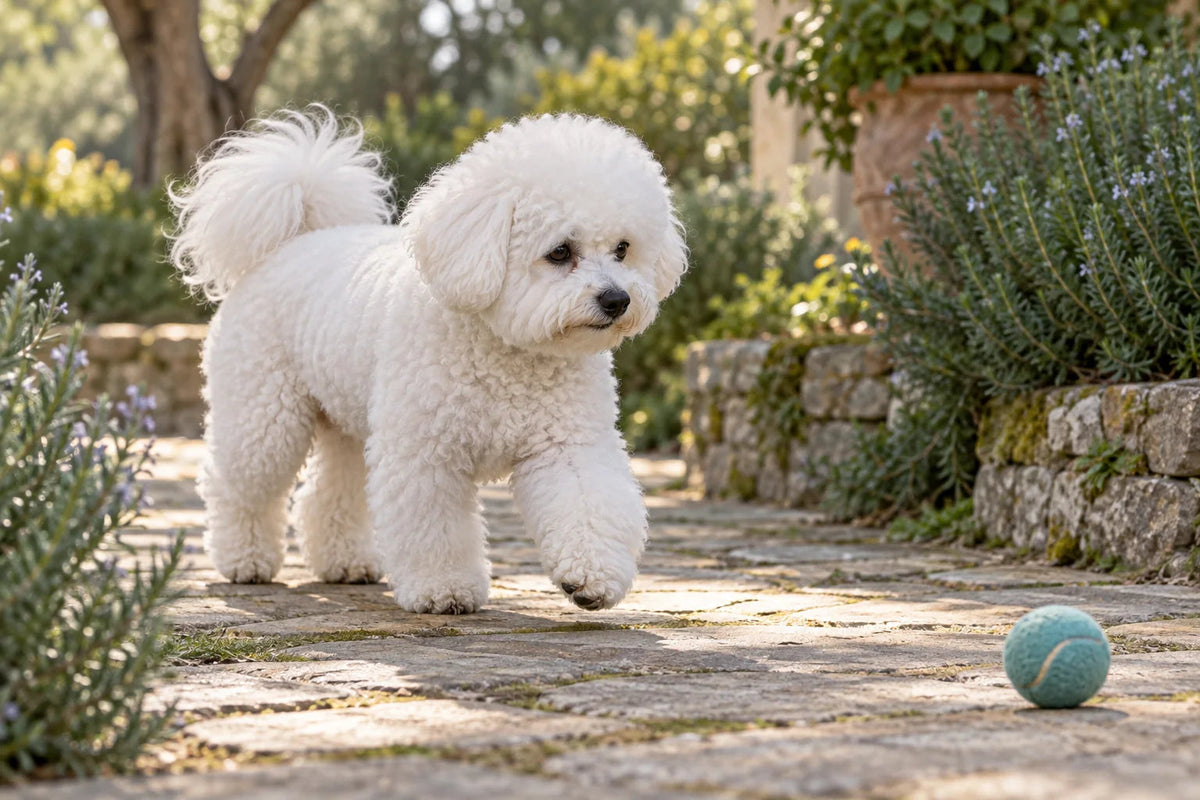
A Bichon’s white curls can hide more than you expect. The outside may still look soft and rounded while loose hair and friction create small tangles underneath. Keeping that coat comfortable is a partnership between a suitable haircut and the work you do between grooms.
You do not need to recreate a show-ring silhouette at home. A practical pet trim, gentle section brushing and a few deliberate checks can make a much more useful routine.
The priority is a combable coat, not maximum fluff. Check the roots and friction areas, choose a length you can maintain, and arrange the next trim before your dog becomes difficult to brush.
Why low shedding still means regular work
Bichons have a soft undercoat beneath a curlier outer coat. Hair that loosens can remain caught within that coat, so little hair on the sofa does not mean there is nothing to remove. The AKC’s Bichon guidance recommends frequent brushing and regular professional grooming.
A brush that glides over the surface can miss the places where the hair meets the body. Check a small parted section rather than judging the whole coat by its bounce. You should be able to work through manageable hair without tugging the skin or making your dog pull away.
Build a realistic between-groom plan
Start with a quick daily look at the face, feet and friction areas. Schedule several thorough brush-and-comb sessions through the week; longer or denser coats may need daily work. Let the actual condition decide whether the routine is sufficient.
The Bichon breed club’s grooming advice describes regular professional styling, often about monthly, supported by maintenance at home. Ask your groomer what interval suits the length they leave. Putting the next appointment in the diary while the coat is still comfortable is easier than solving a matting problem later.
- After a walk: check paws and lower legs for ordinary dirt, leaves and twigs before they work into the curls.
- After a meal or drink: gently clean residue from facial hair and dry the damp ends.
- During brushing: check behind the ears, collar or harness contact, armpits and tail base separately from the back.
- During a quiet weekly check: look at nails and any dewclaws; do not rely on walking to maintain every nail.
How to work through the curls gently
- Set up a secure surface. Use a non-slip mat and a height you can manage safely. Keep a small dog from jumping or falling, and never leave it unattended on a table.
- Part a narrow layer. Lift a little hair so you can see the section beneath. A suitable soft slicker or pin brush should move through the hair with light strokes.
- Deal only with loose tangles. Support the hair near its base and work from the ends. Do not repeatedly brush harder over a knot that is not changing.
- Comb-check the finished section. A coarse section is a useful first check; use finer spacing only when the hair passes freely. Keep the teeth from scraping the skin.
- Stop at a sensible point. If the dog gets tired, take a break and continue with the next section later. Comfortable cooperation matters more than finishing on your schedule.
The VUNRO 5-inch Coarse and Fine Straight Comb is a compact option for checking manageable furnishings. It is not a mat-removal shortcut. Firm knots, felted patches or pain should change the plan to a groomer’s assessment before bathing or clipping.
Keep a white coat clean without overdoing it
White hair makes ordinary dirt easy to see. That can tempt owners into frequent scrubbing or stronger products, but the goal is clean, comfortable hair—not an artificially white finish. Use dog shampoo suited to your dog and follow the label rather than inventing a dilution or leaving a rinse-out product behind.
Before bathing, check the coat for tangles. Wet and rinse through its depth using lukewarm water, keeping the face and ears out of the spray. Press the curls with absorbent towels; rubbing back and forth can undo your preparation. If using a dryer, introduce it gradually and keep the air comfortable and moving.
Do not assume that a fluffy surface is dry all the way through. Check sheltered areas beneath the legs and behind the ears. If clipping follows, finish drying fully and check the coat with a comb first. Our coat preparation guide covers that process in detail.
Choose the shape after choosing the maintenance
A round head, full legs and a plush body each add maintenance. If you struggle with tangles, explain where they occur and ask the groomer to make those areas easier to manage. A shorter body alone will not solve heavily tangled ears or leg hair.
Take a photograph and discuss the finish in plain terms: the retained body length, how much hair remains on the legs, how the face stays clear and when to return. “Puppy cut” does not specify the same result to every groomer.
Bichon styling can involve both clipping and scissor finishing. If you want to learn home clipping, have the handling and an uncomplicated body trim demonstrated first. Leave detailed shaping close to eyes, lips, feet and other delicate areas to someone with the skill to do it safely.
Buy for the job you have learned
For a prepared coat and a suitable learned body trim, the VUNRO D-Series Clipper is one option. Check the finished length with your groomer: the included #10 blade cuts close and should not be treated as a default Bichon haircut.
Longer finishes may use an appropriate compatible guard setup. A guard must travel through separated hair, and it must match the blade system beneath it. If it snags, stop and reassess; do not force it through to keep the promised length.
Common Bichon grooming questions
Why does my dog look fluffy but the comb catches?
Surface brushing may have missed a layer underneath. Return to a small section with gentle work. If it is compacted or painful, ask a groomer to assess it instead of repeatedly trying to pull through.
Can I keep a short Bichon coat?
Yes, a manageable pet trim can be a sensible choice. Keep checking the remaining coat and furnishings between haircuts; shorter does not mean maintenance-free.
Should I remove facial staining with stronger cleaner?
No. Gently remove ordinary residue, keep hair dry and clear of the eyes, and avoid household whitening products. Persistent wetness or irritation needs advice rather than harsher grooming.
Keep learning
More from the Blade Blog
Whippet Grooming: Gentle Coat Care and Comfortable Nails
Read the guide →
Chihuahua Grooming: Smooth Coats, Long Coats and Tiny Paws
Read the guide →