French Bulldog Grooming: Clean Folds, Coat and Nails
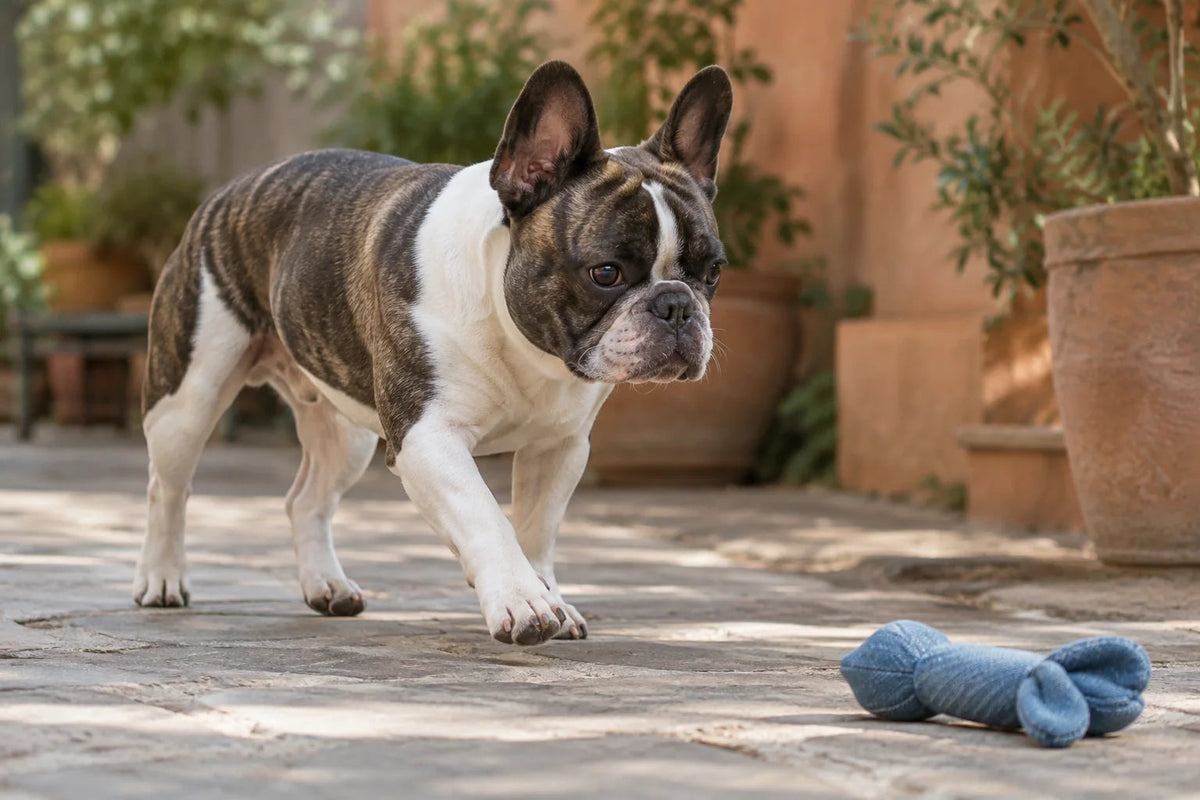
A French Bulldog's short coat is straightforward to brush, but that does not make the whole grooming routine automatic. The important details are often small: moisture in a fold, grit between the toes or a nail that has escaped the last trim.
Keep sessions calm, cool and short. You are maintaining a smooth natural coat and comfortable feet, not preparing this dog for a body haircut.
Short coat, careful details. A gentle weekly brush is a useful starting point. Add regular fold and foot checks, and clean only as needed without leaving moisture behind.
Choose tools for a smooth coat
The AKC French Bulldog profile recommends weekly brushing with a suitable bristle brush or grooming mitt and keeping facial folds clean and dry. This coat does not need the same root-level combing routine as a long-haired or curly-coated dog.
A soft brush or rubber grooming mitt should move comfortably over the body. Start on the shoulders or side where the dog enjoys being touched, and use a lighter touch on the belly, chest and bony areas.
Remove loose hair from the tool as you go. Do not keep rubbing to make every possible hair come out, and avoid aggressive undercoat tools or repeated scraping. If the skin turns pink or the dog moves away, pause and reconsider the pressure and tool.
Check folds without turning it into scrubbing
Look at the dog's individual folds in good light. They vary in depth, so a routine that suits one Frenchie may be too much or too little for another. Check for trapped moisture or visible debris rather than assuming every fold needs the same treatment every day.
- Have clean soft cloths ready before starting.
- Gently expose only the accessible fold, without pulling the face tightly.
- Remove ordinary surface dirt with a soft lightly dampened cloth.
- Use a separate dry cloth to remove the moisture you introduced.
- Stop if the area is sore, damaged or painful to touch.
Keep water and cleaning products away from the eyes and nostrils. Do not apply household cleaners, fragrances or powders into folds. If a fold requires a special cleaning product or has recurring problems, ask a veterinary professional to set the routine rather than experimenting.
The AKC's French Bulldog care overview also highlights clean, dry folds and the breed's limited tolerance for heat. That is a reason to keep grooming comfortable, not to use hotter air to finish faster.
Make bath time easy to leave and easy to finish
Prepare a non-slip surface and keep everything within reach. Do not balance the dog on a narrow sink edge or make them scramble out of a slippery bath. A calm helper can be useful, but no one should hold the muzzle shut to complete the wash.
Use comfortable water and a dog shampoo suitable for the individual dog, following the label. Wet and wash the body gently, keeping direct spray away from the face and ear openings. Rinse carefully beneath the chest and between skin folds without flooding them.
Press dry with towels. Give folds and the spaces around the feet a separate check. If you use a dryer, it should be suitable for dogs, on a comfortable setting, supervised throughout and directed away from the face. Stop if the dog appears distressed or struggles with the experience.
A bath is not required after every outdoor trip. Local cleaning of muddy feet can often do the job. Blue Cross's bathing guidance explains why the dog's coat, dirt and activities should guide the frequency.
Remember the areas you do not see from above
Check the underside, groin and tail area for ordinary dirt. Some French Bulldogs have a recessed fold near the tail; others do not. Ask a professional to show you how to inspect your dog's anatomy gently, rather than probing into a space you cannot see.
Dry any area you have cleaned. Persistent odour, discharge, soreness or reluctance to be touched needs assessment. These are not problems to disguise with perfume or solve by scrubbing more firmly.
Clean harnesses and bedding as part of the routine. Putting a freshly cleaned dog back into damp or dirty equipment defeats much of the work.
Make nails a calm, separate task
Check nails regularly, including dewclaws. Short walks and indoor living do not guarantee enough natural wear. Ask a groomer to show you the correct length and where to stop on your dog's nails.
The VUNRO nail grinder can help with gradual smoothing if the dog is comfortable with vibration and sound. Introduce the tool without touching the nail first, reward calm behaviour and build up slowly. Use brief contact with pauses so you do not create heat.
Do not force a complete set of nails into one session. One comfortable nail today can be more useful than a struggle that makes the next attempt harder. If you cannot identify a safe amount to remove, use professional help.
What a good finish looks like
The coat lies naturally, accessible folds are clean and dry, feet are checked and the dog is relaxed. There is no need to add a clipper haircut, a harsh de-shedding session or a complicated collection of cosmetic products.
Consistency makes the difference: a quick inspection finds small cleaning jobs while they are still simple, and a gentle routine is much easier to repeat.
Keep learning
More from the Blade Blog
Whippet Grooming: Gentle Coat Care and Comfortable Nails
Read the guide →
Chihuahua Grooming: Smooth Coats, Long Coats and Tiny Paws
Read the guide →